22.6.2026
Buster’s predecessor Kello was a pioneer in aluminium boats
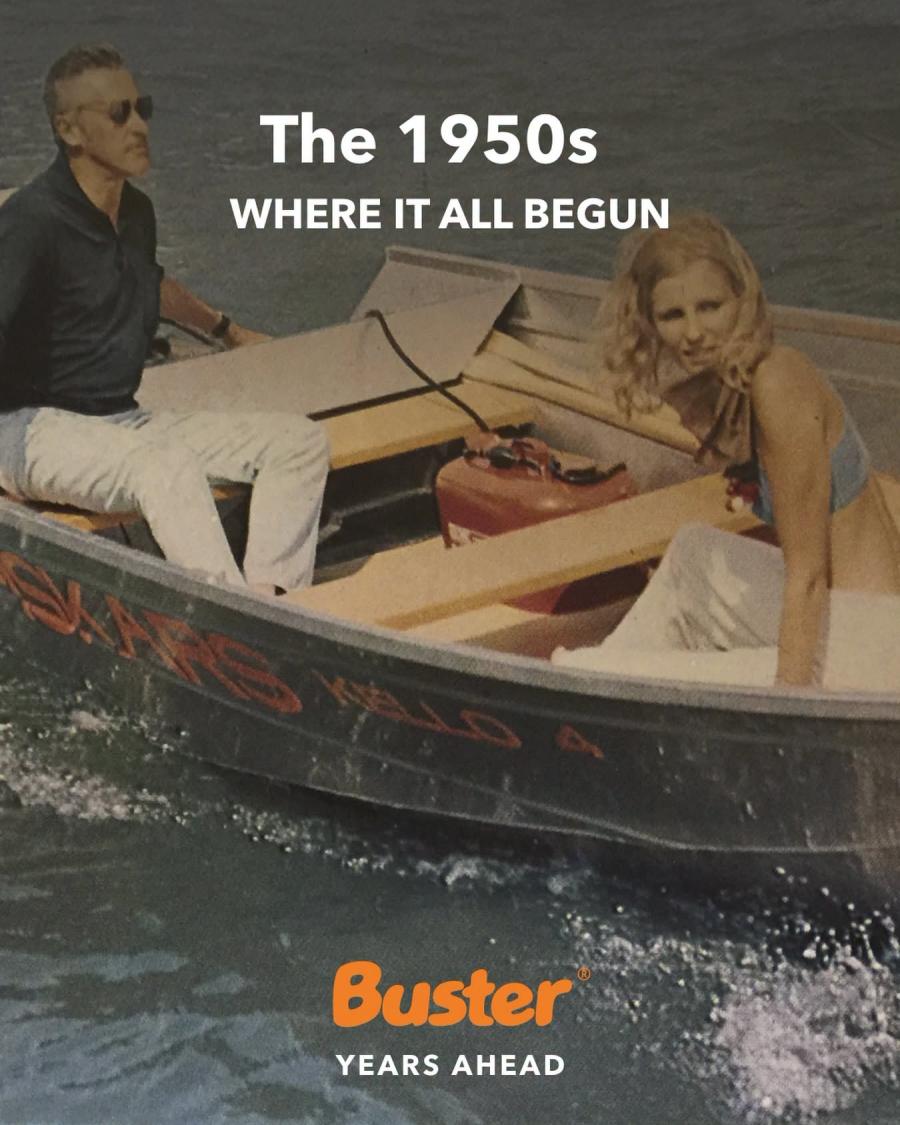
Modern Buster aluminium boats received their current name in the mid-1970s, but the Nordic aluminium boat range had its origins several decades earlier. Buster’s predecessor was called Kello, named after its place of manufacture, Kellokoski, in Tuusula, about fifty kilometres north of Helsinki.
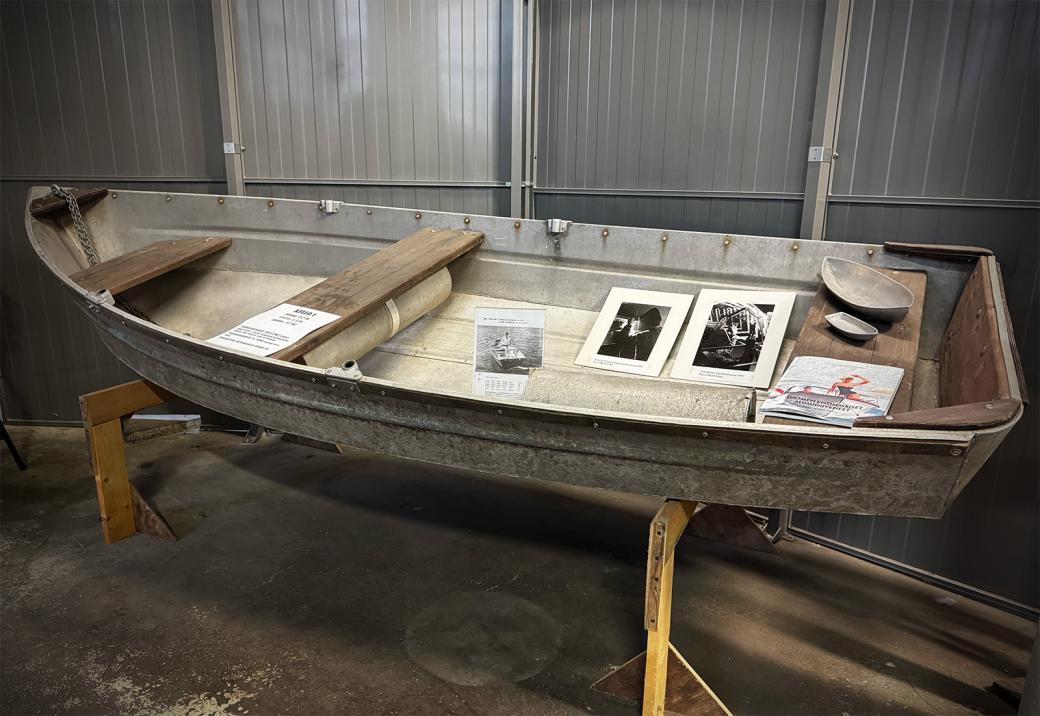
The first Kello boat was the Kello 1, a 3.2-metre-long and 1.3-metre-wide boat weighing just 57 kilos. This pioneering new model was presented at the Helsinki Technical Fair in 1955 and at the Allt för sjön boat show in Stockholm the following year.
Almost 800 boats were sold during the first year of production alone. Built from “light metal”, as aluminium was commonly called at the time, the boat was easy to row, but it could also be fitted with a small outboard engine.
Recommended propulsion: 7' oars or a 1 ½–2 ½ hp outboard engine
Many of the basic qualities already found in the first Kello boat are still familiar from today’s Busters. Thanks to their aluminium construction, Kello boats were safe, carefree and durable. In addition to the hull material, typical features of the range included dark brown mahogany thwarts, a blue side stripe, welded construction and an unsinkable design that was ahead of its time.
On the earliest models, cylindrical aluminium buoyancy tanks were mounted under the thwarts. In the 1960s, polystyrene foam protected by aluminium sheet was introduced as the buoyancy material.

Behind the new aluminium boat range, which quickly proved to be a success, was the Carlander family, owners of the Kellokoski Ironworks (in Swedish Mariefors). Managing Director Torsten Carlander’s eldest son, Per Håkan Carlander, had become familiar with aluminium boatbuilding abroad. After returning to Finland, he proposed series production of boat types designed for Nordic conditions.
Kello 1 was soon followed by the four-metre Kello 2 rowing boat, which became highly popular, and by a series of larger Kello 4 motorboats with engine power of up to 20 horsepower. The range quickly expanded to 16 boat models, while six basic models were produced on a larger scale.
Fiskars acquired the Kellokoski Ironworks in 1962 and continued the production of aluminium boats. As the factory facilities in Kellokoski became outdated, the decision was made, as the mid-1970s approached, to move production to Ähtäri, to Fiskars-owned Inha Works.
A total of approximately 14,000 Kello boats of various models were built in Kellokoski – first under the Kellokoski Ironworks and later under Fiskars ownership. Exports were important from the very beginning: 40% of the boats were exported to as many as 19 countries around the world.

Boat production in Ähtäri began in November 1976. The first boats built there were Kello 12 models, whose lines already clearly resembled the later Busters. The model was renamed Fiskars 12. The boat was 3.6 metres long and fitted with a 15 hp outboard engine. It was developed into the slightly larger Fiskars 14, a 4.15-metre model designed for a 20 hp engine.
In 1977, the models received new names: Buster and Mini Buster. The Buster boats were introduced to the general public for the first time at the Vene 77 boat show in Helsinki.
Explore older Buster aluminium boats: Model range through the years

More information about Kello boats can be found in Gunilla Carlander-Reuterfelt’s book Suomen ensimmäiset alumiiniveneet – Kello-veneen tarina (Finland’s first aluminium boats – the story of the Kello boat).